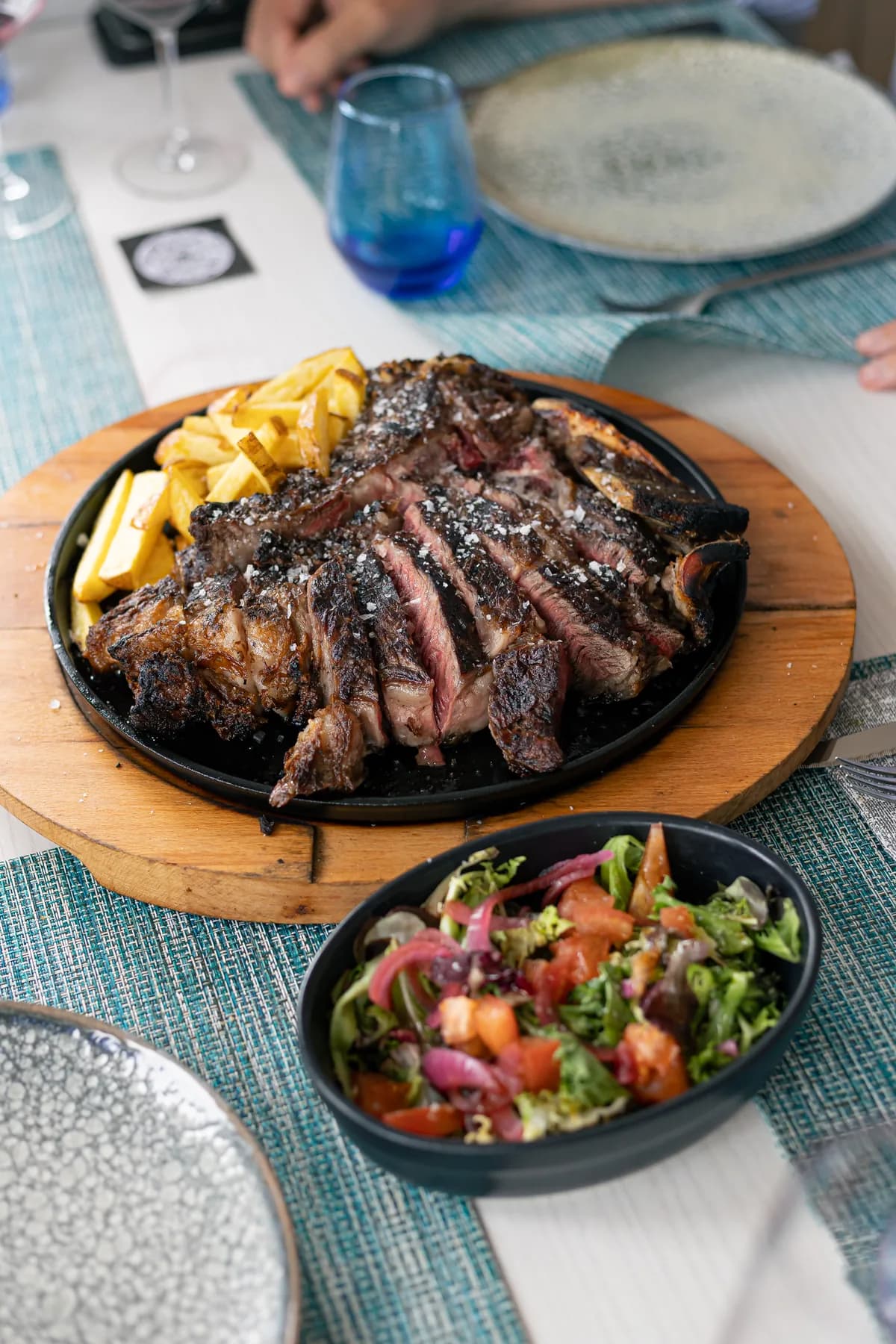
Steak · Ageing cabinet · Fire
The cut changes. The ritual remains.
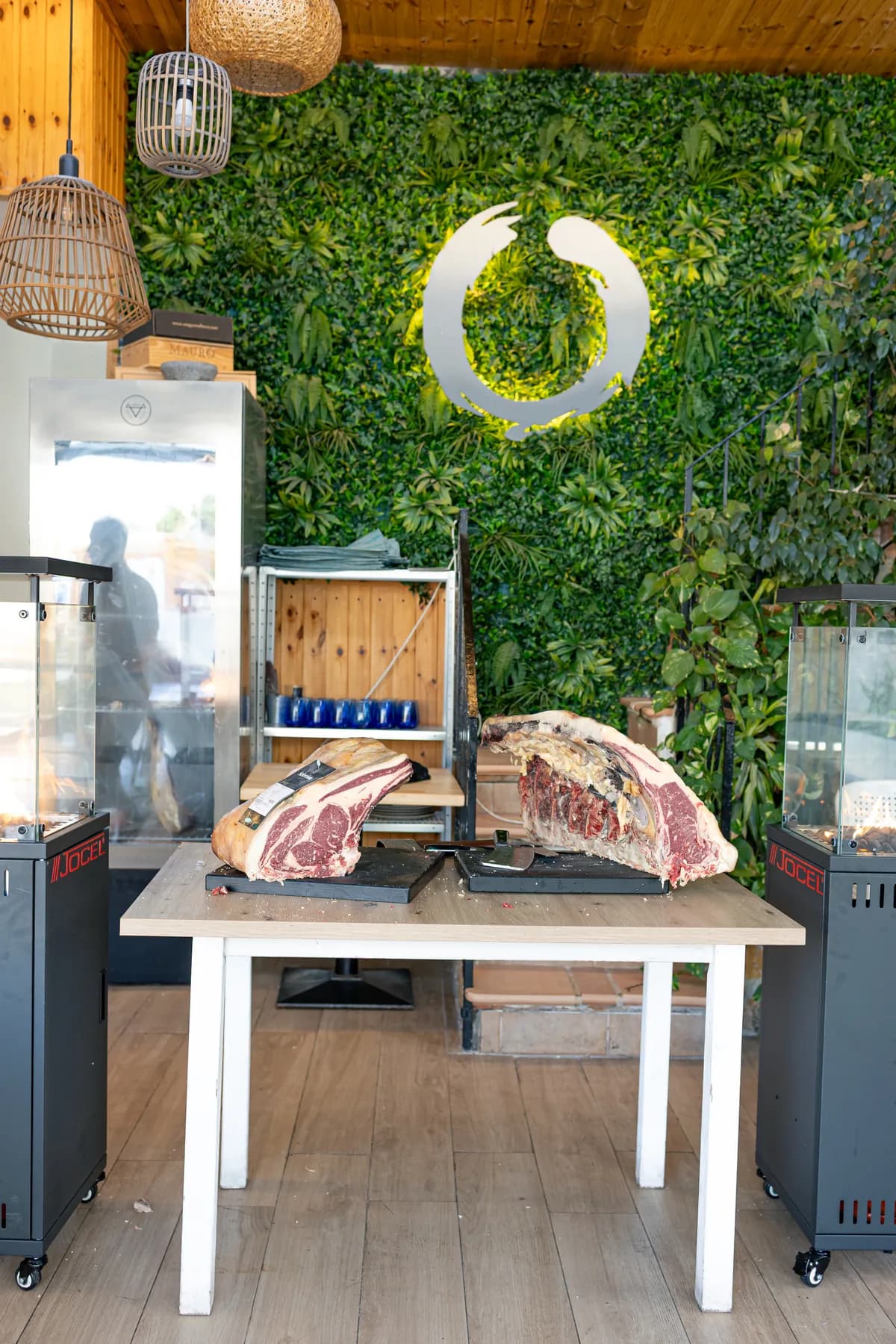
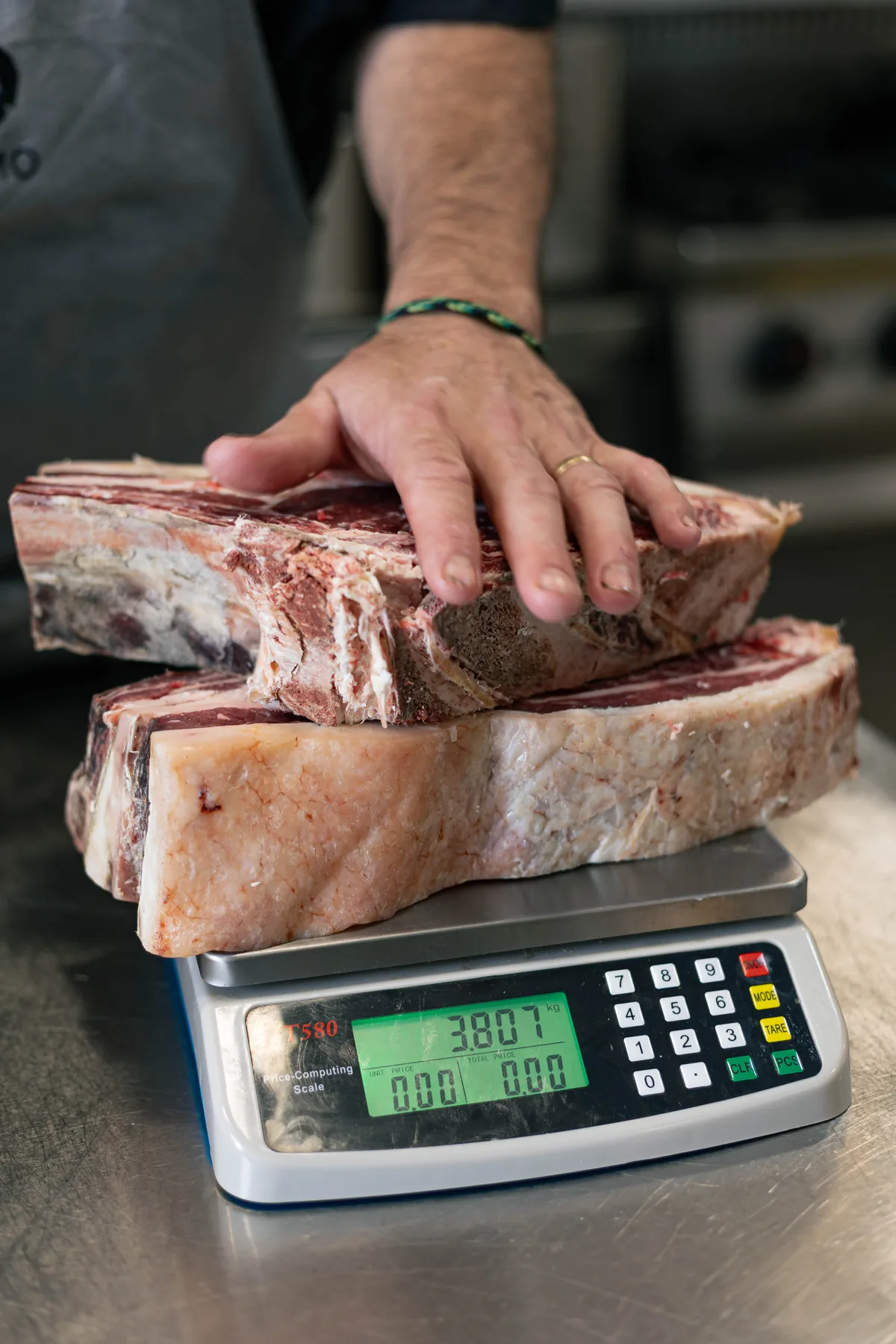
The ageing cabinet shapes every service. We present the cut, agree its weight and doneness, carve it and bring the steak to the fire.
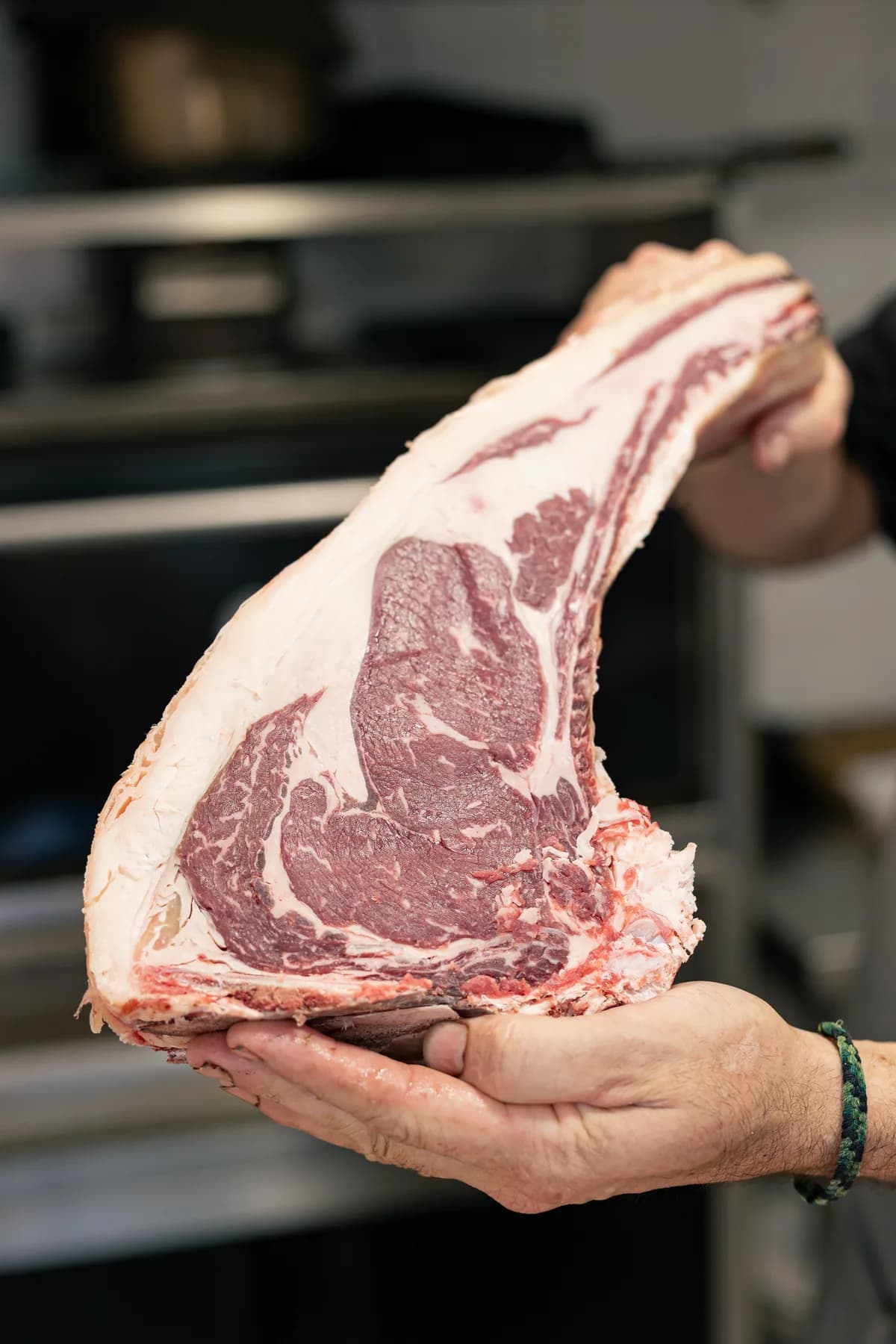
Choose before cooking
The steak begins in the cabinet.
We do not work with one fixed cut: availability can change. The team presents what is in the cabinet that day and explains the selection so the table can choose from the real options.
Steak is cut and sold by weight. That is why the menu does not publish a fixed price per piece: the available cut, weight and preferred doneness are confirmed before cooking.
02 / Ageing
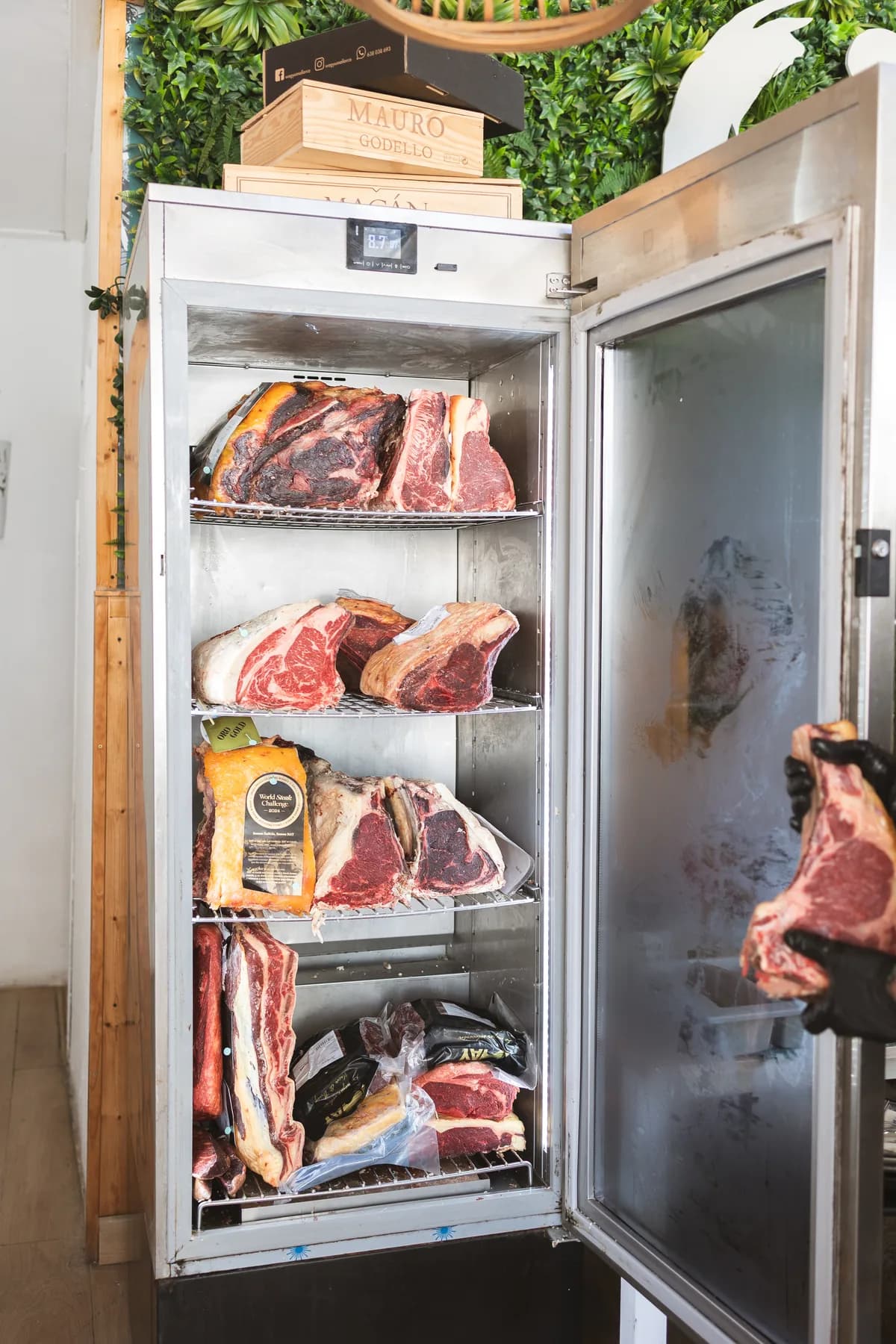
A cabinet that changes with every service.
The cabinet holds the cuts available and lets guests see them before choosing. It is not presented as a permanent catalogue: origin, breed, weight and availability depend on the pieces held at that moment.
03 / Breeds and origins
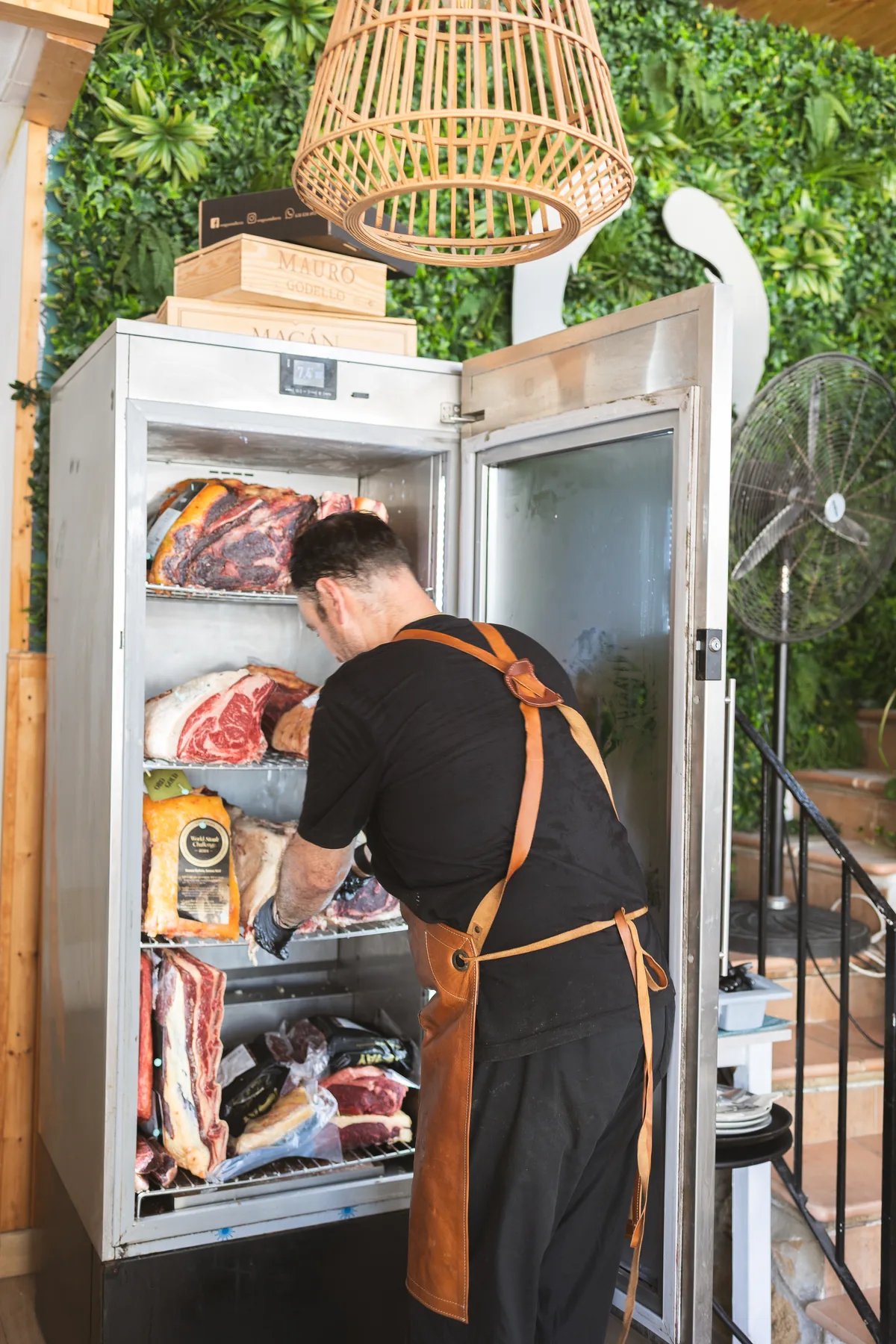
There is no single breed. There is a living selection.
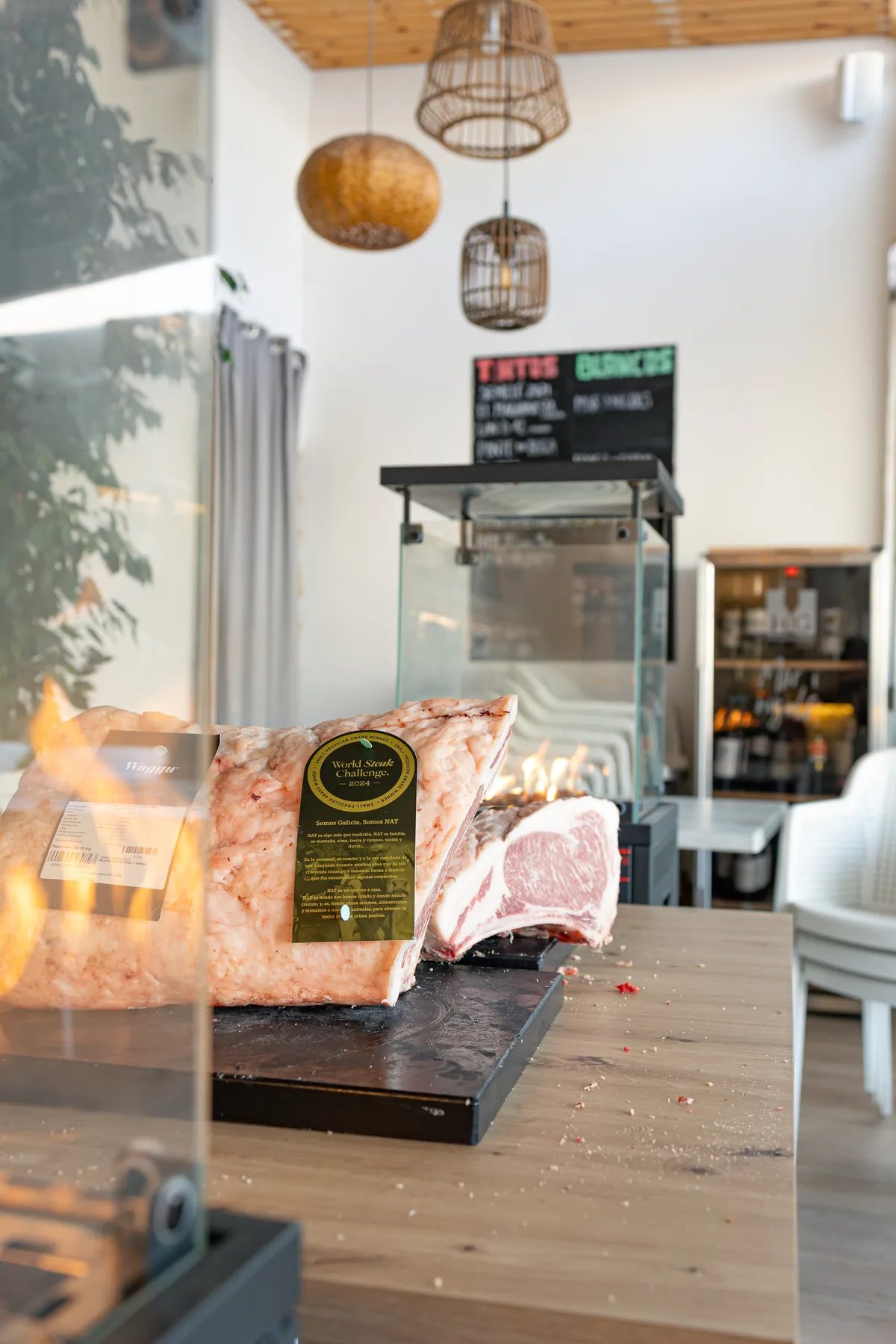
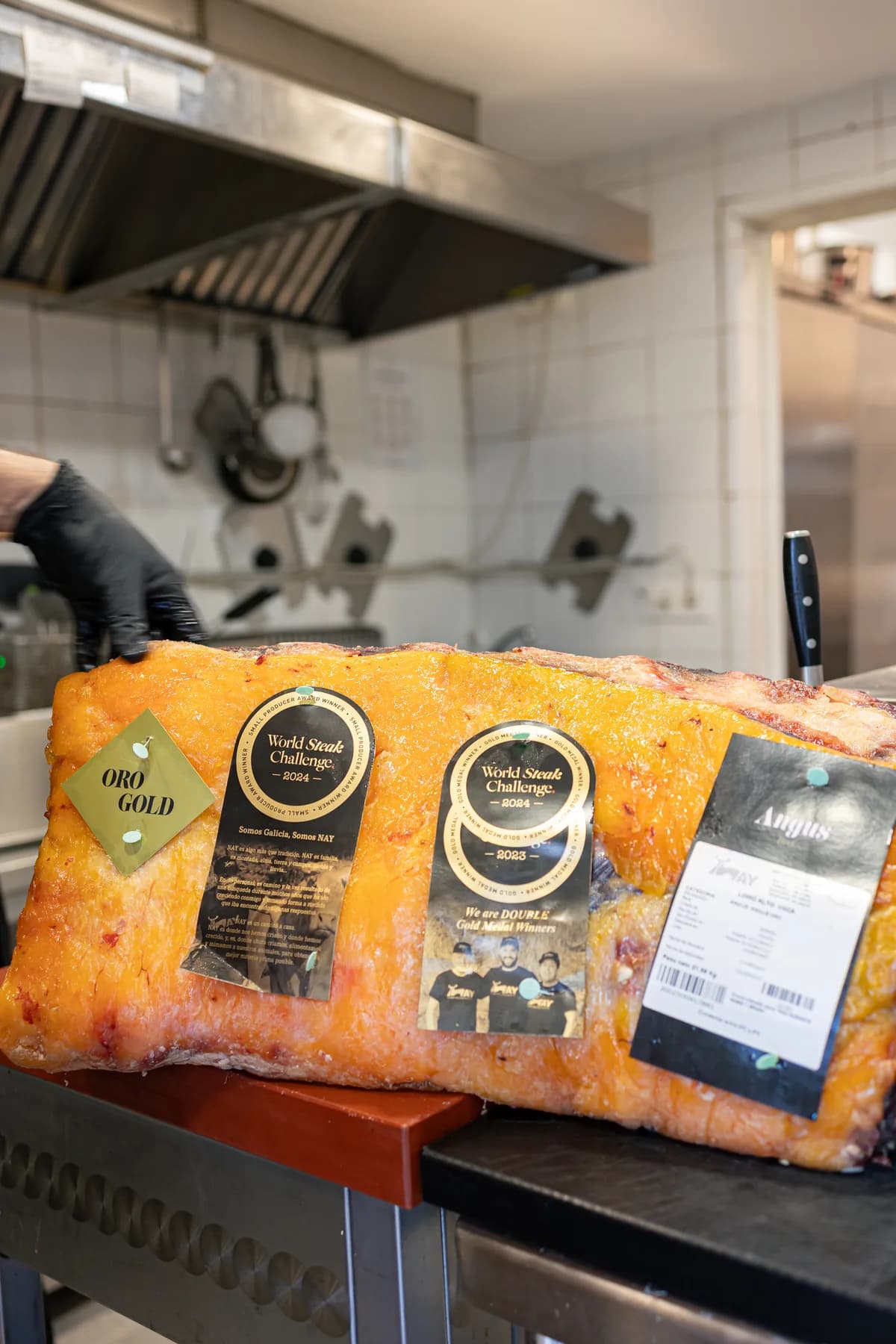
Breed and origin depend on that week's supplier and are announced on the restaurant's chalkboard. Wagyu or Angus are just examples of cuts that have passed through the cabinet: ask the team which cut, breed and origin are available on the day of your visit.
04 / Cut and fire
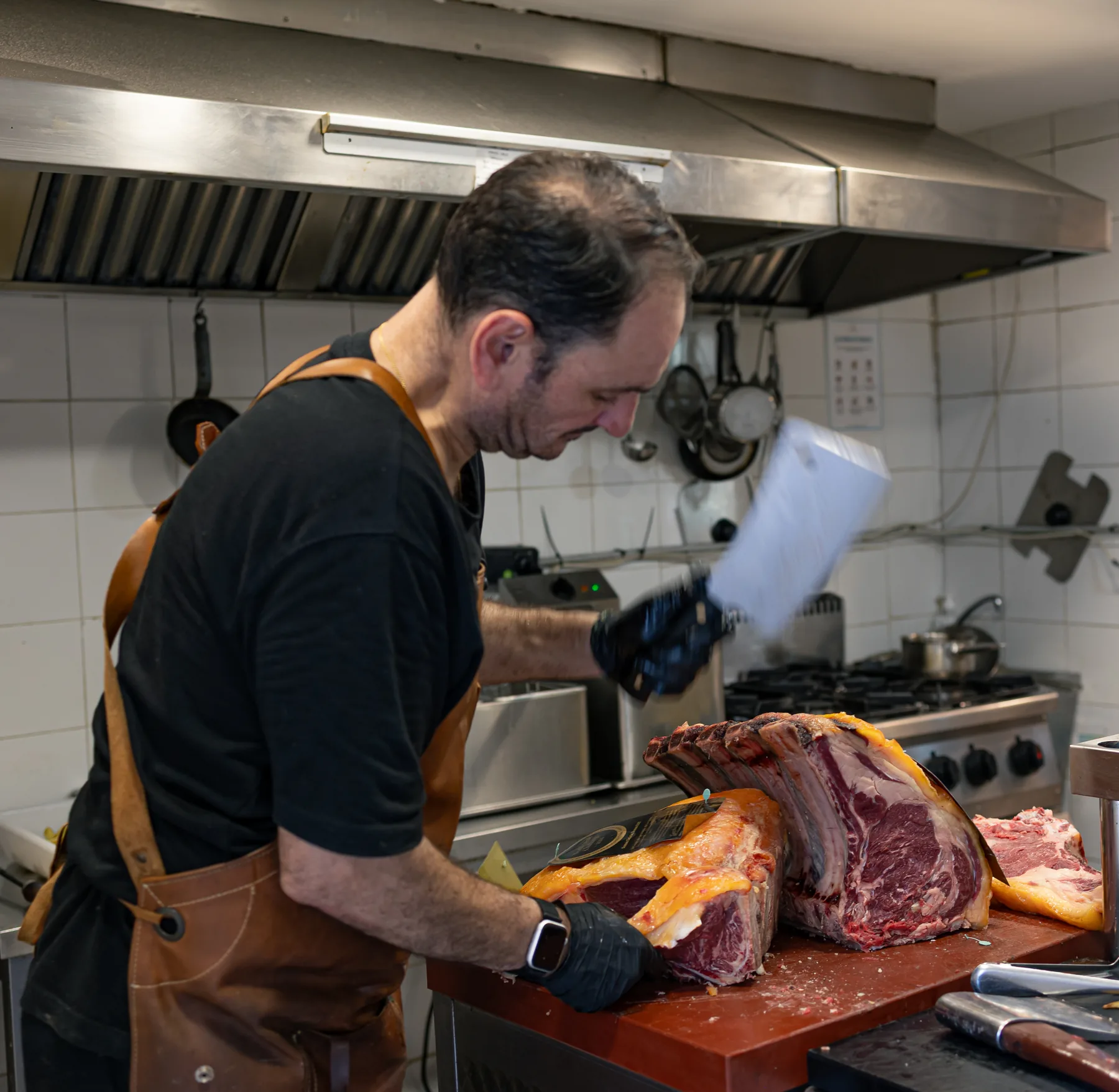
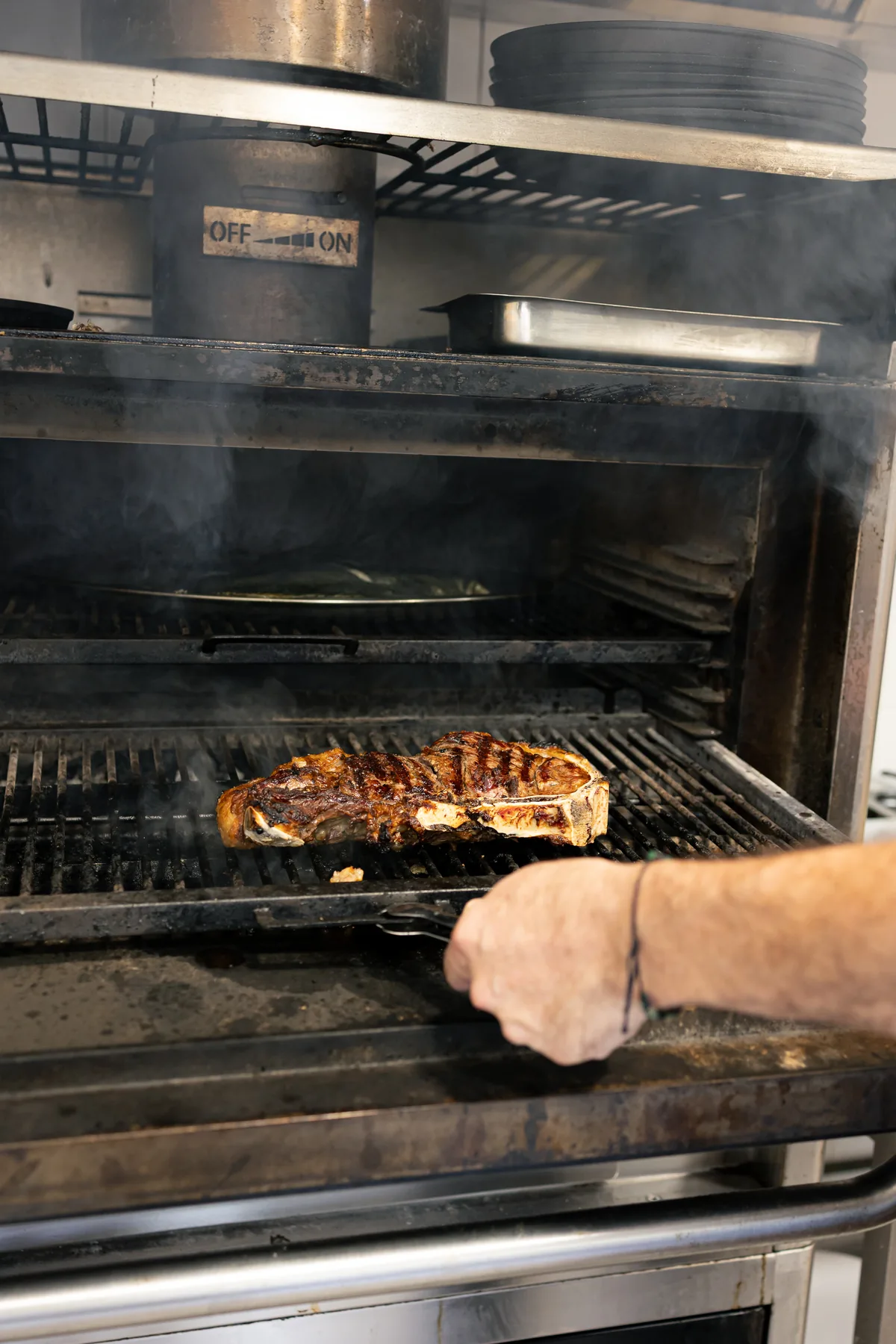
First the knife. Then the fire.
Once the cut and weight are agreed, carving prepares the steak for even cooking. The fire marks the outside and brings the centre to the doneness discussed with the table.
05 / Doneness
Doneness is agreed, never assumed.
Before the steak reaches the fire, the team asks how the table would like it cooked. Thickness and weight are part of that conversation: not every steak responds to heat in the same way.
06 / Beyond steak
The menu continues around the fire.
The current menu includes duck breast, Iberian pork secreto cooked for 24 hours, coquelet, an aged-beef burger, Angus Prime short rib cooked for 48 hours, beef fillet and imported rib eye. These dishes and weights are defined on the menu; steak selection remains subject to the cabinet.